
Acne is one of the most common skin concerns, and it’s not just a “teenage thing”, Adults can have it too, and sometimes it feels like no matter what you do, break-out pops up at the worst time. Understanding why acne happens is the first step in keeping your skin under control.
How does acne occur?
Acne starts in your pores. Each pore has hair follicles and oil glands that produces sebum, a natural oil our skin needs. Problems start when:
- Our skin produces too much oil and the excess oil mixes with dead skin cells which can clog our pores.
- Dirt, oil, environmental conditions or leftover make-up clogs our pores causing bacterial build-up in the affected areas.
- This causes inflammation and our skin becomes red, inflamed and sensitive to touch with the appearance of a spot or break-out.
What can result in acne break-out?
There isn’t just one cause of acne, usually it’s a mix of things:
- Hormones – Hormonal changes during periods, pregnancy or stress can lead to breakouts
- Diet – Foods high in dairy, sugar or refined carbs can make acne worse
- Stress – stress can worsen inflammation and trigger hormonal changes
- Skincare/make-up products – heavy, pore-clogging products, a lack of skincare routines or hygiene practices can all lead to acne breakouts
- Genetics – If your parents struggled with acne, there’s a chance you might too
Different types of acne
Not all acne looks the same, they come in different forms:
- Whiteheads – small bumps on the skin filled with sebum
- Blackheads – open pores that look dark on the surface
- Papules – small red bumps
- Pustules – spots with pus at the tip
- Cysts or nodules – deep, painful bumps that are more likely to leave scars once the skin heals
How to keep breakouts in check?
While some acne is unavoidable, there are steps you can take to minimise the severity:
- Cleanse your skin gently twice a day using gentle and soothing products specific to your own skin type
- Avoid picking or squeezing your spots as this will lead to scars and potentially pigmentation
- Use non-comedogenic skincare and try avoiding heavy make-up or not cleansing your skin thoroughly to get rid of all your make-up
- Choose skincare wisely for each type of acne
- Have a balanced diet, try and reduce stress and stay hydrated
What professional treatments are there to treat acne?
For persistent acne, professional treatments or long term medication can make a real difference, but it may not always get rid of all signs of acne, 100%. If acne is hormonal or diet related then it can take much longer to diagnose what contributes to acne breakout and what measures to put in place to reduce and eliminate all signs of acne.
At elixSKIN Clinic we have helped many clients with acne related skin concerns, some clients have experienced a full recovery and no signs of acne, whereas other have seen improvements in their skin, but require a mixture of medications, treatments and lifestyle changes to treat their acne concerns. The following treatments are great for treating different levels of acne and related skin concerns.
- BioRePeel Microneedling – A combined treatment that exfoliates the skin, stimulates collagen production and targets mild acne, helping reduce active breakouts and improve skin texture, pigmentation and overall skin tone.
- Clarity Acne Peel – Designed to calm inflammation, regulate excess oil, and clear active acne safely and effectively. This treatment is great for purely focusing on acne breakout.
These treatments don’t just treat acne but they also help your skin heal and stay healthier over time.
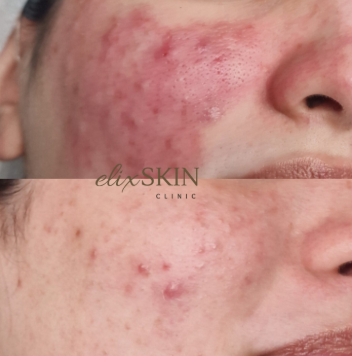
When you book a consultation, you will receive a personalised plan to help your skin look and feel it’s best.
Visit our website to learn more about our treatments or book your consultation today. Why not visit our Instagram page where you can see our before and after pictures.