
Acne is one of the most common skin conditions in the UK, affecting teenagers, adults, and even those well into their 30s and 40s. While breakouts can often be managed with the right skincare routine and professional treatments, a very common long-term issue is what happens after the spots have gone.
For many people, acne leaves behind lasting reminders in the form of acne scars. Acne scarring can affect confidence, skin texture, and the way makeup sits on the face. The good news is that understanding the types of acne scarring is the first step towards choosing the right treatment approach.
What Are Acne Scars?
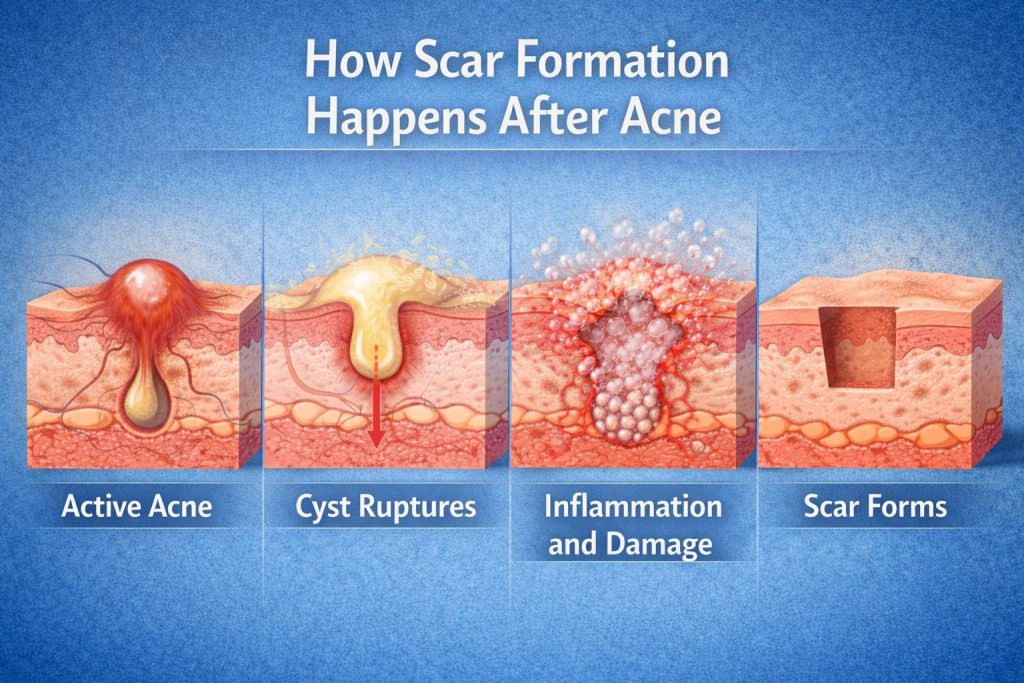
Acne scars are permanent changes to the skin’s texture or structure caused by inflammation during acne. When acne penetrates deeper into the skin, it damages the tissues beneath. As the body tries to repair that damage, collagen production can either be too little or too much — and this imbalance is what creates scarring.
It’s important to understand that not all marks left behind after acne are true scars.
Acne Scars vs Post-Inflammatory Marks (PIH/PIE)
Many people refer to any red or brown mark left after acne as scarring, but these are often post-inflammatory marks, not permanent scars.
Post-inflammatory erythema (PIE)
- Red, pink, or purple marks
- More common in fair skin tones
- Caused by dilated capillaries after inflammation
Post-inflammatory hyperpigmentation (PIH)
- Brown or dark marks
- More common in deeper skin tones
- Caused by excess melanin production
These marks can take weeks or months to fade, but they are not technically acne scars because they don’t involve a change in skin texture.
True acne scarring is usually associated with:
- Dents or pits in the skin
- Raised or thickened areas
- Uneven texture
That’s why identifying the types of acne scars correctly matters, especially when having a professional skin treatment.
Why Do Acne Scars Happen?
Acne scars form when inflammation disrupts the normal healing process. Several factors increase the chance of acne and acne scarring, including:
1. Severity and type of acne
Inflammatory acne (such as papules, pustules, nodules and cysts) is far more likely to cause acne scars than mild blackheads.
2. Picking, squeezing or popping spots
This is one of the biggest contributors to acne scarring. Trauma increases inflammation and pushes bacteria deeper into the skin.
3. Delayed treatment
The longer acne remains untreated, the longer inflammation continues — and inflammation is the key driver of acne scarring.
4. Genetics
Some people naturally scar more easily due to inherited collagen responses.
5. Skin type and tone
Certain types of acne scars and pigmentation issues can be more common in different skin tones due to the skin’s healing behaviour.
The Main Types of Acne Scarring
Acne scars are usually split into two categories:
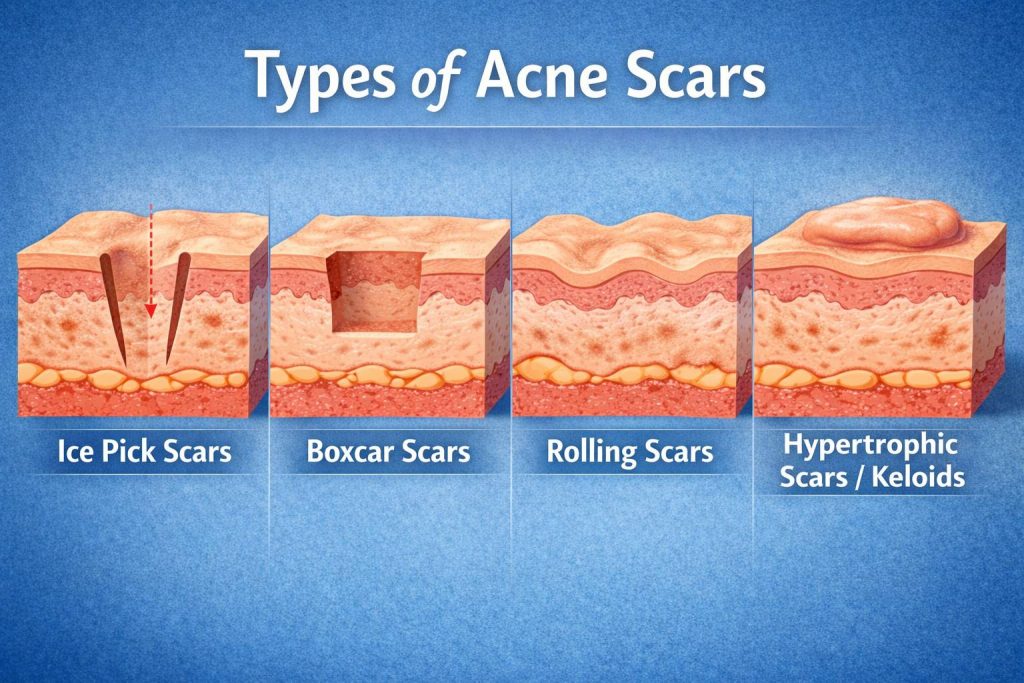
- Atrophic scars (indented scars)
- Hypertrophic and keloid scars (raised scars)
1) Atrophic Acne Scars (Indented / Depressed Scars)
Atrophic scars occur when the skin produces too little collagen during healing. These are the most common types of acne scars, especially on the cheeks and temples.
There are three main forms of atrophic acne scarring:
A) Ice Pick Scars
What they look like
- Deep, narrow holes in the skin
- Appear like the skin has been “punctured” with a needle
- Often look small but can be surprisingly deep
Where they appear
- Cheeks
- Temples
- Forehead
Why they happen
Ice pick scars occur when inflammation destroys collagen deep within the skin, leaving behind a narrow channel-like scar.
Key characteristics
Small opening
Deep and narrow
Usually hardest to treat
Ice pick scars are one of the most challenging types of acne scarring because they extend deeply into the dermis, often requiring specialised professional treatments.
B) Boxcar Scars
What they look like
- Wider, U-shaped depressions
- Clearly defined edges
- Can look like craters
Where they appear
- Cheeks and jawline are most common
- Sometimes on the forehead
Why they happen
Boxcar scars form when acne lesions destroy collagen in a wider area and the skin heals unevenly.
Key characteristics
Wider than ice pick scars
Sharp edges
Can be shallow or deep
Boxcar acne scars vary in depth, which means treatment options can differ significantly depending on severity.
C) Rolling Scars
What they look like
- Broad, shallow dents
- Create an uneven, wavy texture
- Skin looks “rolled” or shadowed, especially in side lighting
Where they appear
- Cheeks, lower face, jawline
Why they happen
Rolling scars are caused by fibrous bands under the skin that pull the surface downward, creating a tethering effect.
Key characteristics
Soft edges
Uneven texture
Often respond well to professional treatments
Rolling scars are commonly seen in long-term acne sufferers and are a major reason skin appears textured even when no active acne remains.
2) Hypertrophic and Keloid Scars (Raised Acne Scarring)
These types of acne scarring occur when the body produces too much collagen while healing.
What they look like
- Raised, thickened areas
- Nay feel firm
- Can be itchy or painful
Hypertrophic and keloid scars are most commonly associated with acne on the:
- Chest
- Shoulders
- Upper back and arms
- Jawline (less common but possible)
A) Hypertrophic Scars
Characteristics
- Raised scar tissue
- Stays within the boundary of the acne spot
- May reduce over time
Hypertrophic acne scars can flatten gradually but often need professional support for best results.
B) Keloid Scars
Characteristics
- Raised, thick, rubbery scar tissue
- Grows beyond the original acne lesion
- Can continue to enlarge over time
Keloid acne scars are more common in:
- Darker skin tones
- People with a genetic tendency to develop keloids
Keloids can be physically and emotionally uncomfortable and require careful treatment planning.
Can You Prevent Acne Scarring?
Prevention is always better than treatment. While not all acne scars can be prevented (especially if you’re genetically prone), you can reduce your risk significantly.
Prevention tips for acne scars
- Treat acne early (don’t wait until it becomes cystic)
- Avoid picking or squeezing at all costs
- Protect skin barrier with gentle skincare
- Use SPF daily (sun exposure worsens marks and slows healing)
- Seek professional advice for persistent acne
Managing acne properly is one of the most important steps in preventing acne scarring later on.
How Professionals at elixSKIN Clinic Assess Acne Scarring
We assess acne scars on:
- Scar type (ice pick, rolling, boxcar, raised)
- Depth and severity
- Skin tone (risk of pigmentation)
- Inflammation level and active acne presence
- Client expectations and lifestyle
This is important because many clients have multiple types of acne scars at once. For example:
- Rolling scars across cheeks
- Ice pick scars around temples
- Boxcar scarring near jawline
A tailored approach is essential.
At elixSKIN Clinic, we have had great results in our Specialist Scar Treatment , have a look at our before and after images on Instagram.
Have a look at our treatments and additional Blogs, to Book your next treatment visit us here.
Visit our website or get in touch to find out more about Acne, Acne Scars and Pigmentation.